



Oil and Gas Drone Inspection Solutions
Oil and gas operations require continuous monitoring in dangerous and hard-to-access environments, including pipelines and offshore platforms. Oil and gas drone inspection solutions allow operators to assess assets safely and efficiently, without interrupting ongoing operations.
By using drones, teams can improve safety, reduce inspection time, and maintain asset integrity while reducing operating costs. ZenaDrone makes advanced drone inspection technology that gives you accurate, useful information that helps oil and gas operations run smoothly without any problems.
Book a ZenaDrone demo to modernize your inspection workflow.
Why Oil & Gas Inspections Need Drones
Oil and gas inspections often happen in dangerous and hard-to-reach places. which is why oil and gas drone inspection is widely adopted. With traditional inspection methods, workers may need to climb high structures, enter tight confined spaces, and work close to live equipment and active pipelines. These tasks increases risk and can interrupt normal operations.
Safety risks with traditional inspections
Traditional inspections depend a lot on manual visual checks, and people must be physically present in risky areas both onshore and offshore. Using drones for inspections helps solve this problem by allowing teams to inspect assets remotely, so fewer workers are exposed to hazardous locations.
Cost and Downtime Challenges
Manual inspections often lead to shutdowns, time taking inspection, and higher costs. Drones inspection in oil and gas make the process faster and more efficient and often without stopping operations. This process reduce time and improves overall inspections performance. Using drones, oil and gas companies can improve safety, reduce costs, and maintain consistent inspection quality across pipelines, facilities, and offshore assets.
What is oil & gas drone inspection?
Oil and gas drone inspections use flying drones with cameras and special sensors to check pipelines, tanks, and offshore rigs. This Process helps to workers inspect equipment without climbing high places and going into dangerous areas.Drones take clear pictures and data to show if something is damaged, leaking, rusty, and overheating. Because drones can inspect while work is still happening, they can reduce shutdowns, save time and money, and help teams find problems early so they can fix them before they get worse.
Inspection Drones for Pipelines
- Find leaks by using regular cameras and heat cameras
- Spot early signs of rust or damage
- Check the pipeline early so it doesn’t break or fail
- Finding problems early keeps people safer and helps avoid expensive shutdowns.
- Refinery and Facility Inspections
Refineries and processing plants have a lot of equipment and many areas are hard to reach. Drones can safely fly to places workers may not want to climb.
Drones can inspect:
- Storage tanks
- Buildings and metal structures
- Tall stacks and high parts
Drones take very clear pictures from the air, so teams can see problems while work continues with little interruption.
Offshore Oil & Gas Inspections
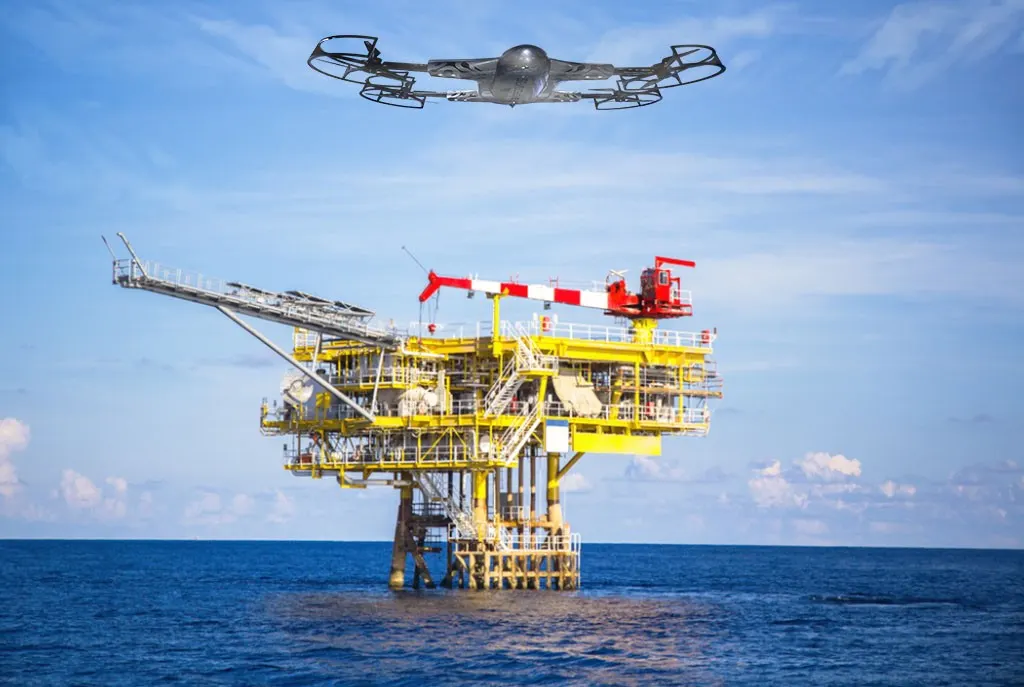
Offshore platforms are out in the ocean, where conditions can be tough and unsafe, and many places are hard to reach. Oil and gas inspection drones let teams check offshore structures from far away, so workers don’t have to go into dangerous areas. Drones collect the same kind of information each time, which helps keep inspections accurate, makes work safer, and reduces time stopped for repairs.
Drone Technology for Oil and Gas Inspection
Oil and gas inspections need drones that can fly safely in dangerous areas, reach faraway places, and keep working while the site is still running. Modern inspection drones use special sensors to watch equipment closely, find problems early, and create clear inspection reports that teams can use to plan repairs.
Sensors Used in Oil & Gas Drone Inspections
Thermal Imaging Sensors
Thermal imaging sensors help drones see heat. This helps find places that are too hot and too cold, which can be a sign of a leak or a problem with equipment. This helps teams find issues early and fix them before they become bigger.
Visual & LiDAR Sensors
Visual sensors take clear, detailed pictures to check structures closely. lidar drone sensors help drones measure and map areas by using light, so teams can see the shape and size of pipes and buildings. Together, these sensors help check the condition of pipelines, facilities, and offshore platforms more accurately.
ZenaDrone Solutions for Oil & Gas Operations
Zenadrone delivers industrial drone inspection solutions specifically designed to meet the demands of oil and gas operations.
Built for Harsh & Remote Environments
ZenaDrone drones can fly in tough places on land and at sea, reaching areas that are hard or unsafe for people to inspection
Accurate & Secure Inspection Data
ZenaDrone inspection drones collect clear photos, heat images, and 3D style measurement data. The information is also kept safe and organized, so teams can track each inspection and trust the results when making decisions.
Benefits of Drone Inspection in Oil & Gas
Drones help oil and gas companies by doing inspections faster and more safely, so people don’t have to do dangerous checks by hand.
Lower Inspection Costs
Drone inspections can lower costs because companies need fewer workers, less heavy equipment (like cranes and scaffolding), and less stopping of work. Drones can use camera and heat checks faster, which saves money while still giving good inspection results.
Faster and Safer Inspections
Drones can send information quickly to inspect pipelines, facilities, and offshore platforms. They help keep people safer by reducing how often workers must go into dangerous places. This also lets companies inspect more often and feel sure about what they find.
Safety and Regulatory Compliance
Oil and gas companies must follow strict safety rules and government regulations. Drone inspections help with this because they follow the same steps each time and create clear records of what was checked. Drone inspections collect photos and sensor readings that can be saved, reviewed later, and checked by auditors, which helps companies prove they are following the rules, keep inspections more transparent, and reduce risks on land and offshore.
Global Oil & Gas Operations Use ZenaDrone
ZenaDrone supports oil and gas operators with inspection solutions designed for deployment across diverse regions and operating conditions. Our drone inspection systems enable consistent data collection and standardized inspection workflows for organizations managing assets across multiple locations.
Worldwide Deployment & Support
ZenaDrone’s inspection solutions are built to support oil and gas operations across different geographic regions. Consistent performance and reliable data capture help multinational operators maintain uniform inspection standards across their assets.
Onshore & Offshore Inspection Capabilities
ZenaDrone inspection drones are engineered to operate reliably across both onshore and offshore environments. From varying terrain and weather conditions to complex operational requirements, our platforms deliver dependable inspection coverage for critical oil and gas infrastructure.
Drone Inspection vs Traditional Methods
Drone-based inspections offer a safer, faster, and more cost-effective alternative to traditional oil and gas inspection methods.
Safety Comparison | Cost Comparison | Inspection Time | Accuracy and Data Quality | |
Drone Inspection | Remote inspections reduce human exposure | Lower manpower and minimal downtime | Fast deployment and repeat inspections | High-resolution, repeatable data |
Traditional Methods | Personnel work in hazardous conditions | Higher labor and shutdown costs | Longer planning and execution | Operator-dependent visual checks |
Talk to ZenaDrone
Discover how oil and gas drone inspection solutions can improve safety, reduce downtime, and enhance asset visibility across pipelines, facilities, and offshore operations. Book a ZenaDrone demo to see how drone-based inspections can modernize your oil and gas inspection workflows.
Frequently Asked Questions (FAQs)
Are drones safe for oil and gas inspections?
Yes. Drones are safe for oil and gas inspections, as they reduce human exposure in hazardous and hard-to-reach areas.
Can drones be used in offshore?
Yes. Drones can be deployed and used on offshore platforms, offshore rigs, and remote areas, and are still operational despite the potential extreme weather and aviation limits.
What sensors are used?
Yes. Firms need to ensure that UAV inspection services operate under aviation rules and site safety requirements. It’s highly suggested to prepare document workflows to support compliance.
Are drones safer than traditional inspection methods?
In many scenarios, yes, because drones can reduce the need for personnel to work at height or enter hazardous zones, lowering exposure risk while maintaining inspection visibility.
How do drones detect pipeline leaks?
Drones can detect pipeline leaks through thermal anomalies, visual signs, and sensor data that indicate any changes to both pressure and temperature.
Experience ZenaDrone in action! Fill out the form below and our team will be in touch to set up a demo schedule.
Thank you for your message. It has been sent.